
Why choose aluminium
garden edging?
Built for the landscape.
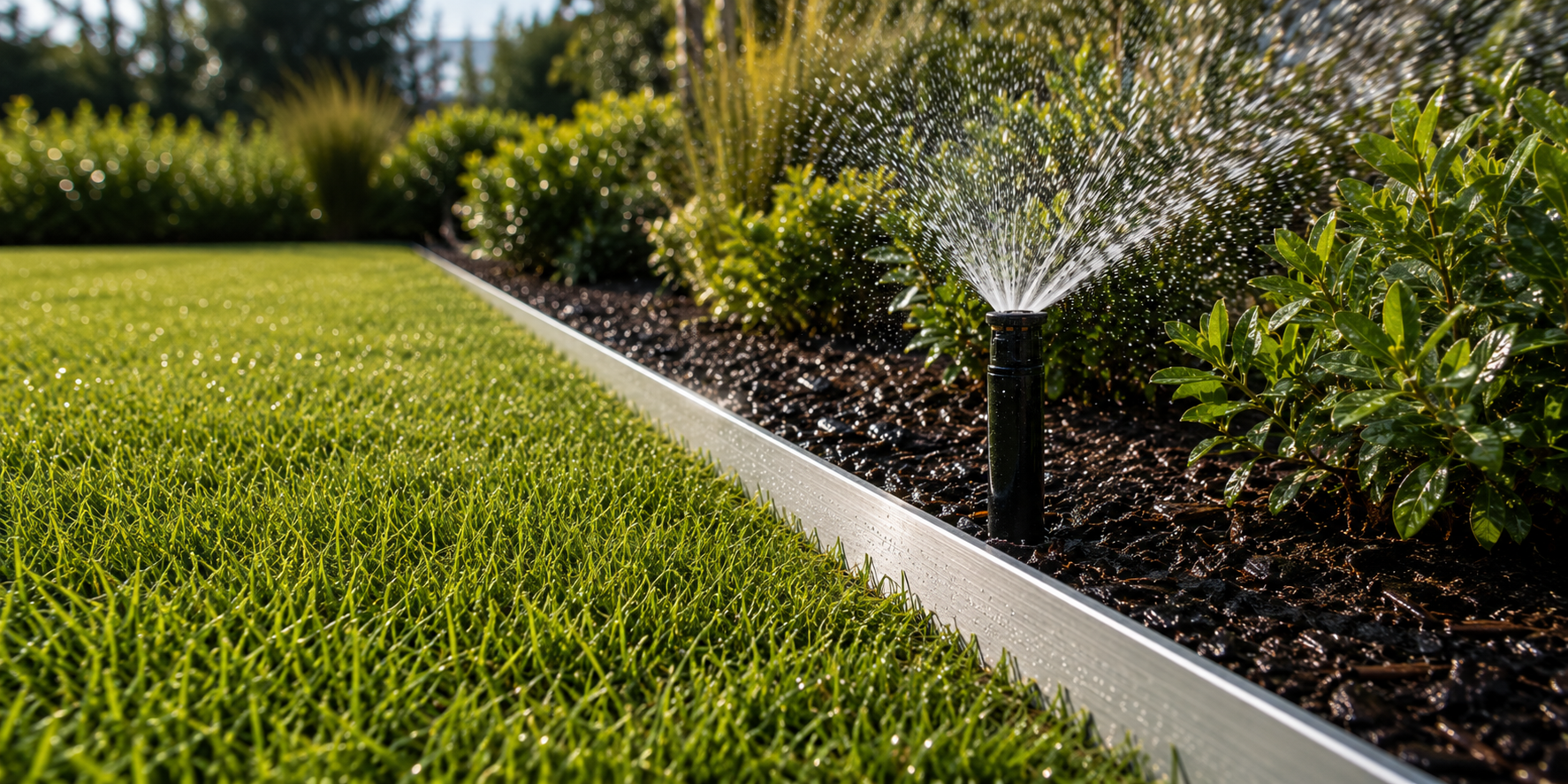
Rain. Irrigation. Soil. Mulch. Coastal air.
Aluminium is made to live where your edging does.
Water is only the beginning.
Persistent moisture influences corrosion behaviour and long-term material performance.
pH, minerals and dissolved salts influence corrosion behaviour in buried materials.
Salt exposure can accelerate corrosion and deterioration of protective coatings.
Mulch and organic matter can retain moisture directly against edging.
Exposure cycles influence corrosion and weathering-steel patina development.
Aluminium
- Naturally forms a protective oxide layer
- No sacrificial zinc coating to consume
- No protective rust patina required
- Does not produce iron rust
- Well suited to landscape applications when the correct alloy and finish are specified
Galvanised Steel
- Protected by a sacrificial zinc coating
- Zinc protection is gradually consumed
- Moisture, chlorides and soil chemistry influence corrosion
- Base steel can corrode once protection is depleted or damaged
- Service life varies according to environmental exposure
Weathering Steel
- Relies on formation of a protective rust patina
- Patina formation benefits from alternating wet and dry exposure
- Persistent moisture can affect stable patina development
- Chloride-rich environments can impair weathering performance
- Rust runoff and staining may need consideration
Why choose aluminium garden edging?
Aluminium garden edging combines strength, corrosion resistance and low maintenance without relying on a sacrificial zinc coating or protective rust patina. It does not produce iron rust and is well suited to lawns, garden beds, soil, mulch, irrigation and coastal landscapes. That is why Hedge uses architectural aluminium across its landscape edging systems.