
Garden Edging for Driveways
Create clean, durable transitions between driveways, lawns, gravel and landscaped garden beds.
Start with the boundary.
The edge of a driveway is one of the strongest lines in a landscape. It establishes where the driveway finishes and where lawn, planting, gravel or other landscape surfaces begin.
Defining this boundary early allows straight runs, curves and transitions to relate to the architecture and the wider garden. The result is a driveway that feels integrated into the landscape rather than simply surrounded by it.
Set out the complete driveway edge before installation and view it from both the street and the house. Long lines and curves should feel deliberate from every approach.
Make the transition feel intentional.
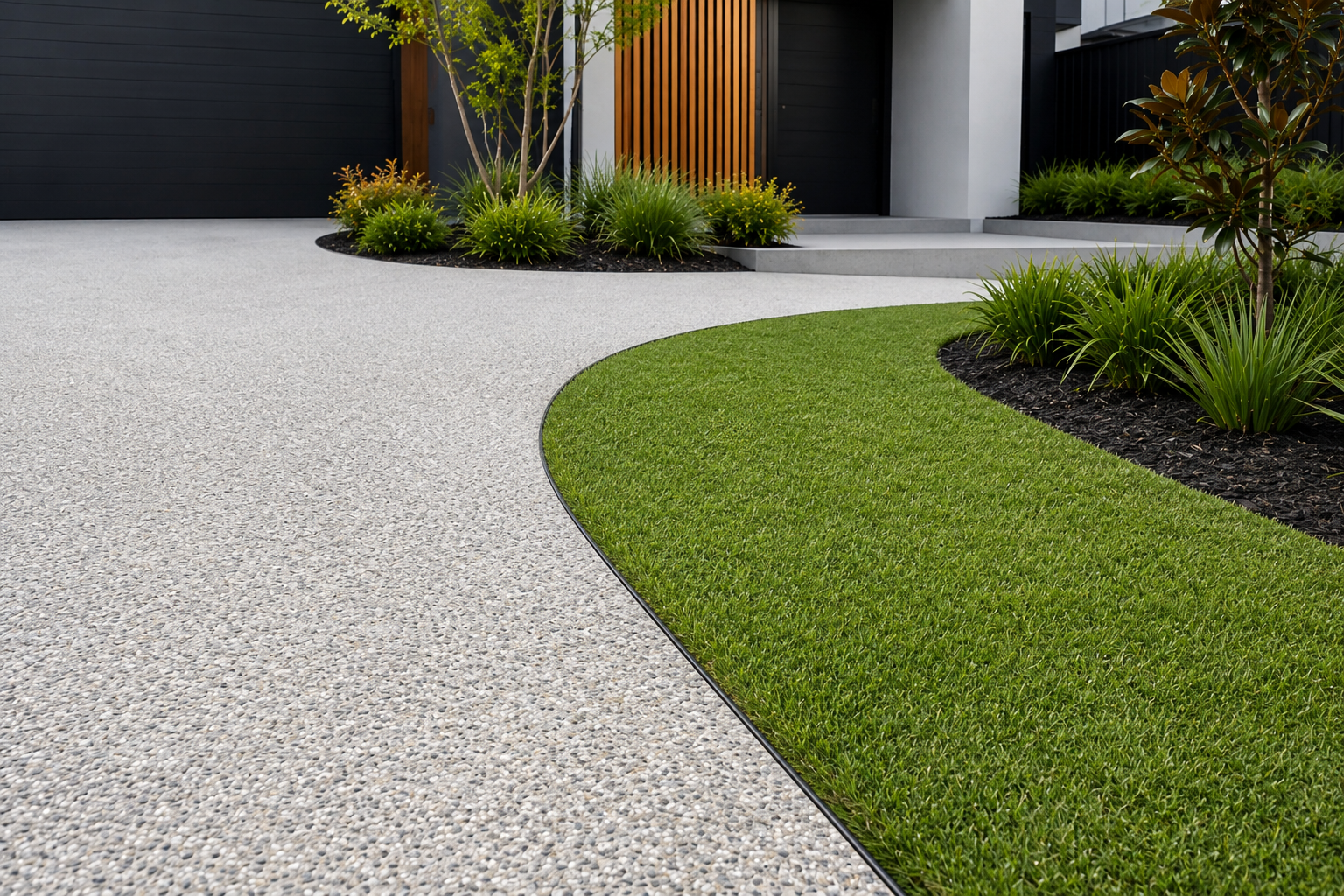
Where a concrete driveway meets lawn, the transition is highly visible. A defined edge can create a precise separation between the hard surface and the softer landscape while maintaining the intended shape of the lawn.
Keeping the edging close to the finished lawn level creates a subtle detail rather than a raised border. The driveway remains visually clean while the lawn finishes neatly against the established line.
Set the edging so the lawn meets it cleanly without a visible gap. The metal should define the transition, not create a second line between the driveway and the turf.
Keep loose material in its place.
Gravel driveways rely on a clear edge to maintain their intended shape. Without a defined boundary, loose stone can gradually spread into lawns and garden beds, softening the line of the driveway over time.
Metal edging creates a continuous border that helps separate gravel from adjoining landscape surfaces while keeping the overall driveway geometry clean and controlled.
Set the finished gravel level slightly below the top of the edging. This helps contain loose aggregate while keeping the metal edge visually subtle within the landscape.
Separate the hardscape from the planting.
Garden beds beside driveways need a clear boundary between paving, mulch, soil and planting. A defined metal edge helps keep these materials visually separate while reinforcing the shape of both the driveway and the garden.
The edging can follow the geometry of the driveway or introduce a softer planting line alongside it. In either case, keeping the edge consistent helps the driveway feel connected to the wider landscape.
Keep mulch and soil slightly below the top of the edging where the garden meets the driveway. This creates a cleaner finish and helps prevent loose material from washing or spilling onto the hard surface.
Let the architecture set the line.
Long straight driveway edges can reinforce the geometry of a home, garage, pathway or entry. When the edging aligns with these elements, the driveway feels more deliberate and connected to the architecture.
Straight runs also make small deviations easy to see. Accurate set-out, consistent joins and secure fixing are important if the finished edge is going to read as one continuous line.
Use a string line for long driveway edges and check the alignment from both the street and the house before final fixing. The longer the run, the more important that initial set-out becomes.
Soften the approach.
Driveways do not always need to follow rigid straight lines. Controlled curves can soften the approach to a home, shape adjoining lawns and garden beds, and create a more natural transition through the landscape.
Aluminium edging can be formed into smooth, continuous curves, allowing the driveway boundary to change direction without losing the precision of a defined architectural edge.
Use broad, flowing curves around driveway entrances rather than a series of tight bends. Check the line from the direction vehicles approach the property as well as from the house.
Design for the environment around the driveway.
Edging beside a driveway is exposed to more than just the landscape. Water, soil, gravel, irrigation, heat and regular maintenance all influence how the boundary performs and looks over time.
Aluminium is well suited to these outdoor conditions because it is corrosion resistant and can maintain a clean architectural profile. The edging should still be positioned as a landscape boundary beside the driveway, rather than used as a substitute for a structural kerb or engineered driveway edge.
Keep the finished edge clear of regular tyre paths and areas where vehicles are expected to drive over it. The driveway construction should carry vehicle loads; the edging defines the adjoining landscape.
Match the edge to the landscape.
The right edging system depends on what happens beside the driveway. For simple transitions between a driveway, lawn or garden bed, Heavy Duty creates a clean, defined landscape boundary.
Where the landscape changes level, Terrace or HiRise can create a deeper architectural edge between adjoining surfaces. Choose the system around the landscape condition rather than the driveway alone.
Start with the finished levels on each side of the edge. A simple boundary and a change in level are different landscape conditions and may require different Hedge systems.
Notice the driveway. Not the edge.
A well-designed driveway edge should become part of the landscape. Consistent finished levels, clean joins and controlled lines allow the driveway, lawn and planting to read as one considered composition.
Once installed, the edging should feel visually quiet. Its job is to maintain the boundary and preserve the geometry without competing with the architecture or surrounding garden.
Walk the complete driveway and check the edge from the street, entrance and house. Adjust any uneven levels or irregular lines before completing the surrounding lawn, gravel or planting.
Design the edge. Then price it.
Choose the Hedge system, height and finish for your driveway landscape, then build an estimated project price.