
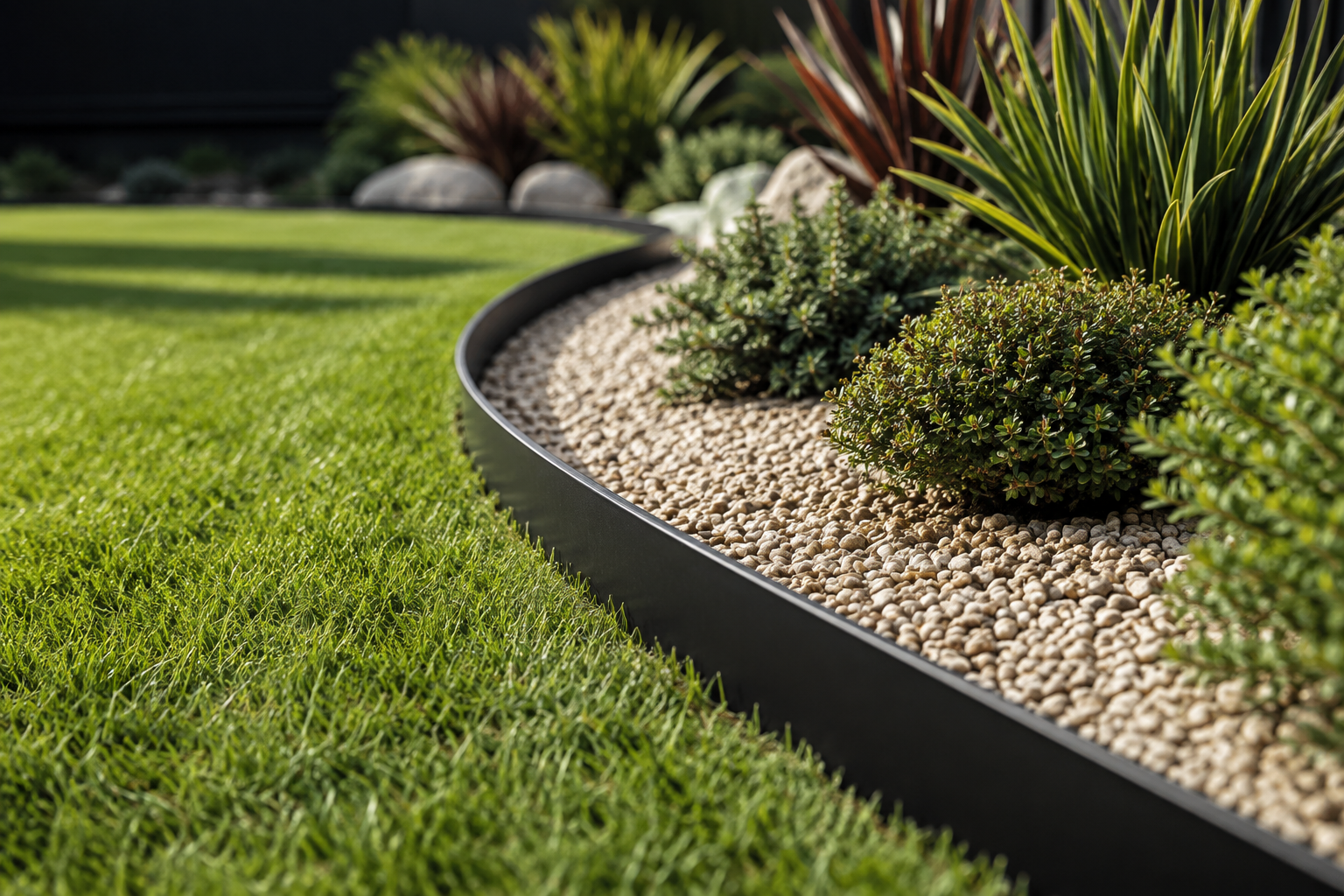
Compare metal garden edging options and understand how aluminium, steel and other materials perform across different landscape applications.
Metal garden edging creates a defined boundary between different landscape surfaces, including lawns, garden beds, gravel, mulch and pathways. Its slim profile allows the edge to provide structure without becoming a dominant feature.
Different metals behave differently once installed. Aluminium, galvanised steel and weathering steel vary in weight, corrosion behaviour, appearance and how easily they can be formed into straight lines and curves.
Do not choose metal edging on appearance alone. Consider where it will be installed, the surrounding materials, exposure to moisture and how the edge needs to perform as the landscape matures.
Aluminium garden edging combines a clean architectural profile with practical advantages in the landscape. It is lightweight to handle, can form both straight lines and controlled curves, and does not rely on a protective zinc coating to resist corrosion.
Its slim profile also allows the edging to sit quietly between lawn, planting, mulch and other landscape surfaces. Different finishes can make the edge almost disappear or turn it into a deliberate architectural detail.
Aluminium is particularly useful where clean lines, curves and long-term exposure to the landscape are important. It provides the definition of metal edging without the weight and corrosion behaviour associated with some steel alternatives.
Steel garden edging can create strong, defined landscape lines and is widely used for lawns, garden beds and pathways. Because steel contains iron, however, its long-term performance depends on the type of steel and how its surface is protected.
Galvanised and coated steel use protective surface treatments to reduce corrosion. Cutting, scratching and prolonged exposure to moisture can affect that protection, making material selection and installation details particularly important in landscape environments.
When comparing steel edging, look beyond thickness and initial appearance. Consider the protective coating, exposed cut edges, surrounding soil conditions and how moisture will interact with the material over time.
Weathering steel, often referred to as Corten steel, is chosen for its distinctive rust-coloured appearance. When exposed to suitable environmental conditions, the surface develops an oxidised patina that becomes part of the material's character.
That changing surface makes weathering steel visually different from aluminium or coated steel. The surrounding landscape also needs to be considered, as runoff from the developing patina can stain nearby paving, concrete and other light-coloured surfaces.
Use weathering steel when the changing rusted appearance is an intentional part of the landscape design. Consider drainage and adjoining surfaces carefully where rust-coloured runoff could affect the finished project.
One of the strengths of metal garden edging is its ability to create long, precise lines through a landscape. Straight edges can align lawns and garden beds with paving, pathways, walls and architecture to give the entire garden a more considered structure.
The cleaner the design, the more noticeable small deviations become. Correct set-out, consistent joins and secure fixing are essential if a long metal edge is going to remain visually straight.
Set long straight runs from a string line rather than following the existing lawn or ground. Check the edge from both directions before final fixing to make sure the line remains continuous.
Metal garden edging can also create smooth, flowing curves through lawns and garden beds. The ability to form the material accurately allows the edge to follow softer landscape shapes while maintaining a crisp, continuous boundary.
Material choice matters when curves are part of the design. Aluminium is lightweight and formable, making it particularly suited to creating controlled curves without losing the clean architectural character of a metal edge.
Create the curve as one continuous visual line. Broad, consistent radii generally produce a more resolved landscape than a series of short bends or sudden changes in direction.
Garden edging spends its life in a demanding environment. Soil, irrigation, rainfall, mulch and changing weather can keep sections of the edge exposed to moisture for long periods, making corrosion resistance an important part of material selection.
Aluminium naturally forms a protective oxide layer, while steel products depend on the grade of steel, protective coatings or an intentionally developed patina. Understanding these differences matters when choosing an edge for long-term landscape use.
Think about where the edging will actually live. Regular irrigation, wet soil, mulch and coastal exposure can create a very different environment from the one visible when the garden is first installed.
Not every landscape edge performs the same role. Some simply define the transition between lawn and garden, while others form taller edges where the landscape changes level.
Hedge Heavy Duty is designed for clean everyday landscape boundaries. Terrace extends the edge into raised garden beds and changes in level, while HiRise is designed for taller architectural landscape edges.
Start with what the edge needs to do. For a simple lawn or garden boundary, begin with Heavy Duty. Where the landscape steps upward, consider Terrace or HiRise for the taller edge.
Metal garden edging works best when every detail feels intentional. Finished height, alignment, curves, joins and the relationship with surrounding materials all contribute to how the completed landscape is perceived.
A well-designed edge should define the lawn, planting, gravel or pathway without unnecessarily competing for attention. The metal provides the structure; the landscape remains the feature.
Look along the completed edge rather than directly down at it. Straight runs should read as one continuous line and curves should flow naturally through the landscape without obvious changes in direction.
Choose the Hedge system, height and finish for your landscape, then build an estimated project price.