
Aluminium Garden Edging
A practical guide to choosing, designing and installing aluminium edging for cleaner, more considered landscapes.
A strong edge doesn't need to look heavy.
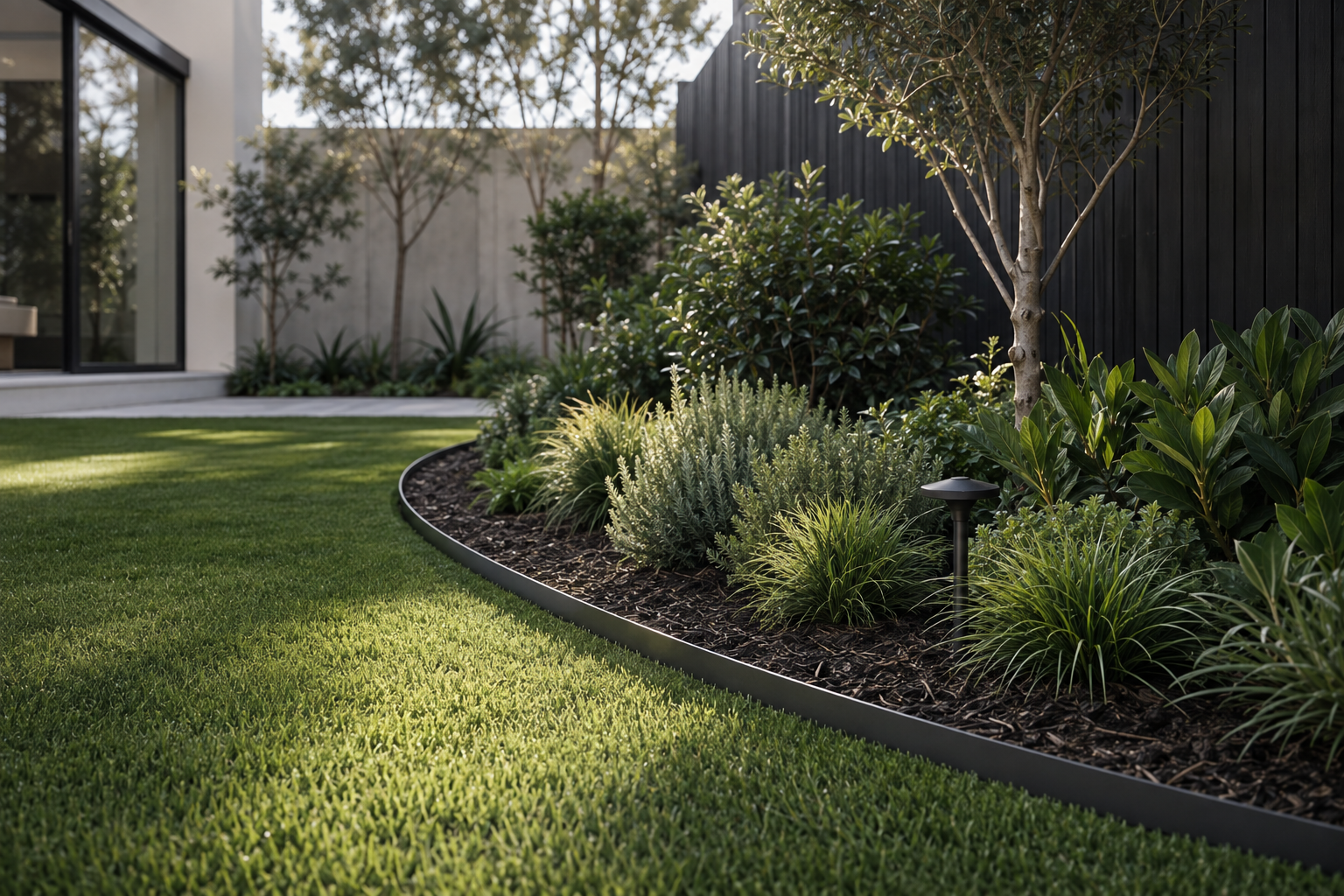
Aluminium garden edging creates a defined boundary between lawns, garden beds, pathways, paving and other landscape surfaces without introducing a visually heavy border.
Its combination of strength, corrosion resistance and formability makes aluminium particularly useful in landscapes where straight architectural lines and smooth curves need to work together.
A simple profile with an important job.
Aluminium garden edging is a slim metal profile installed between different areas of a landscape to create a clean, controlled boundary. It can separate lawn from garden beds, contain mulch or gravel, define pathways and create precise transitions beside paving and other hardscape surfaces.
Most of the edging is installed below or close to finished ground level, leaving only the upper edge visible. This allows the landscape to remain the focus while the edging quietly maintains the line between adjoining materials.
The aluminium profile is typically secured using fixing spikes and guides, allowing it to remain stable while following straight runs, corners or smooth curves through the landscape.
Explore Hedge Heavy Duty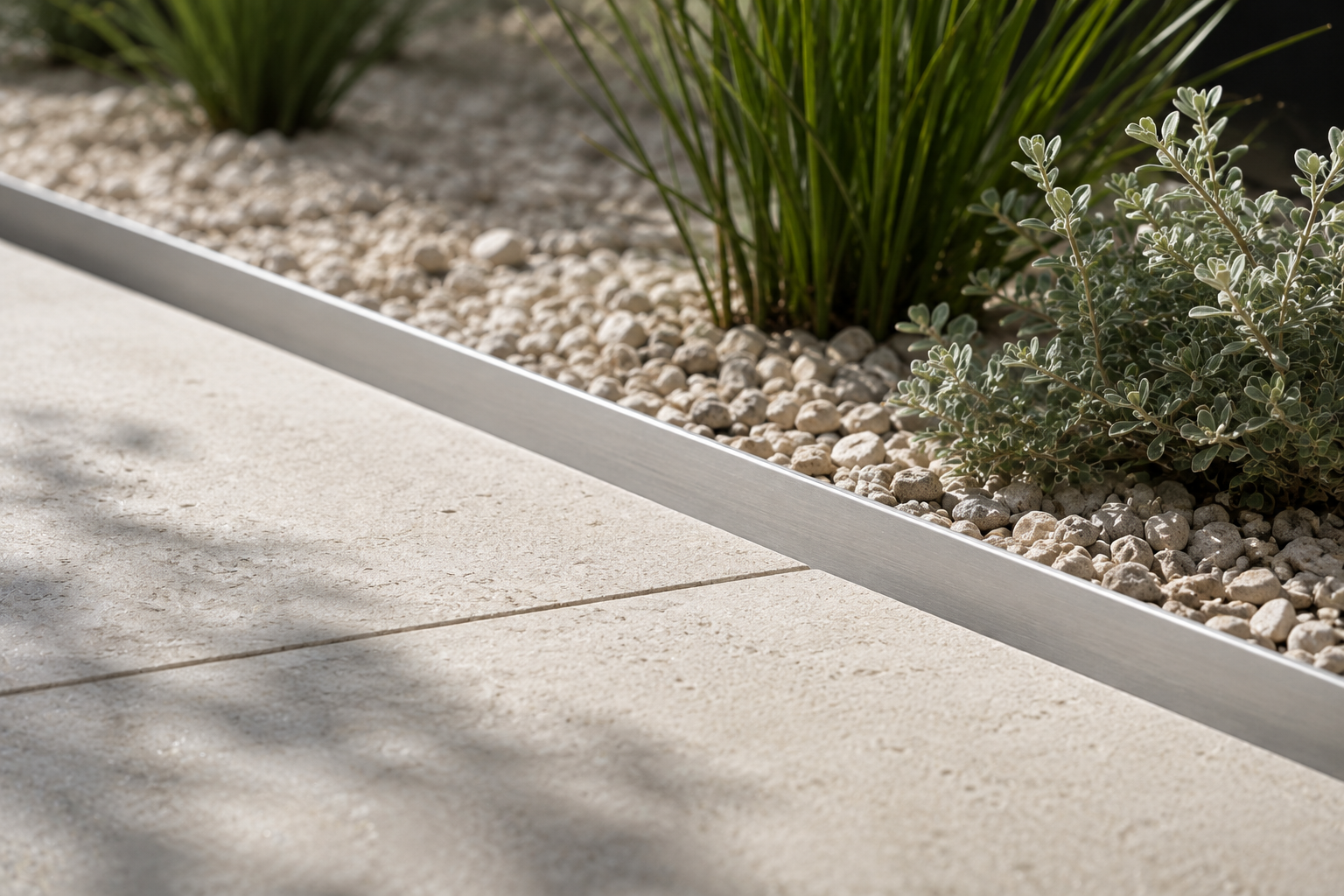
One material. Many transitions.
Aluminium garden edging can define the transition between many of the materials found in a landscape. It can separate lawn from planting, contain mulch or gravel, define pathways and create a clean boundary beside paving and concrete.
Because aluminium can follow both straight lines and smooth curves, the same edging system can continue through different areas of a garden without changing the visual language of the landscape.
It can also be used where the edge needs to become more visible, including raised garden beds and modest changes in level, with the profile selected to suit the application.
Explore garden edging ideas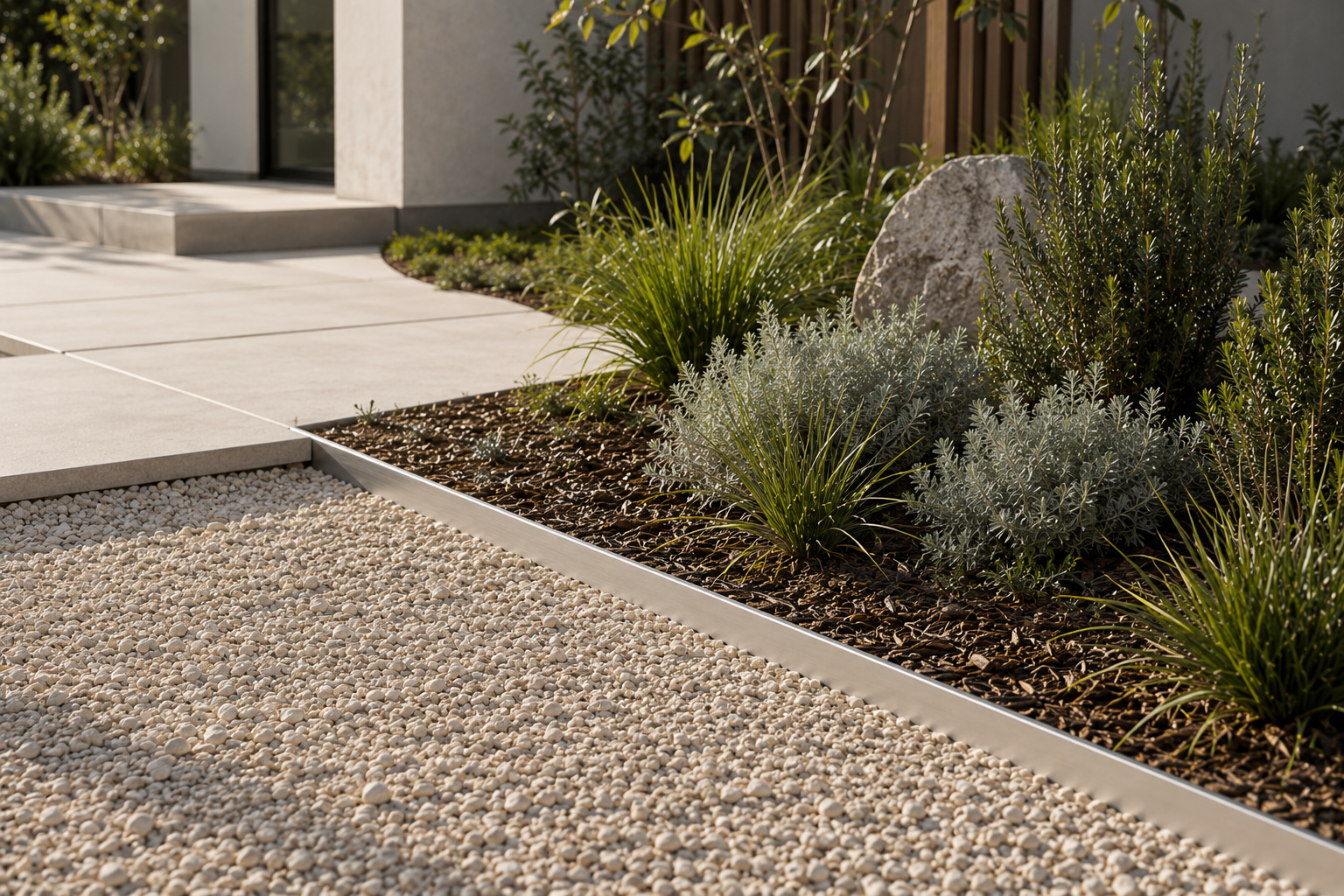
The finished line starts with the set-out.
Aluminium garden edging is typically positioned along a prepared landscape line before being secured into the ground. Taking time to establish the alignment first helps create cleaner straight runs and smoother, more controlled curves.
The edging is then fixed in position using spikes and guides, with adjoining lengths connected to create a continuous edge through the landscape.
Once the alignment and finished height are correct, soil, lawn, mulch or aggregate can be brought back to the edge so that only the intended amount of the profile remains visible.
See the installation guide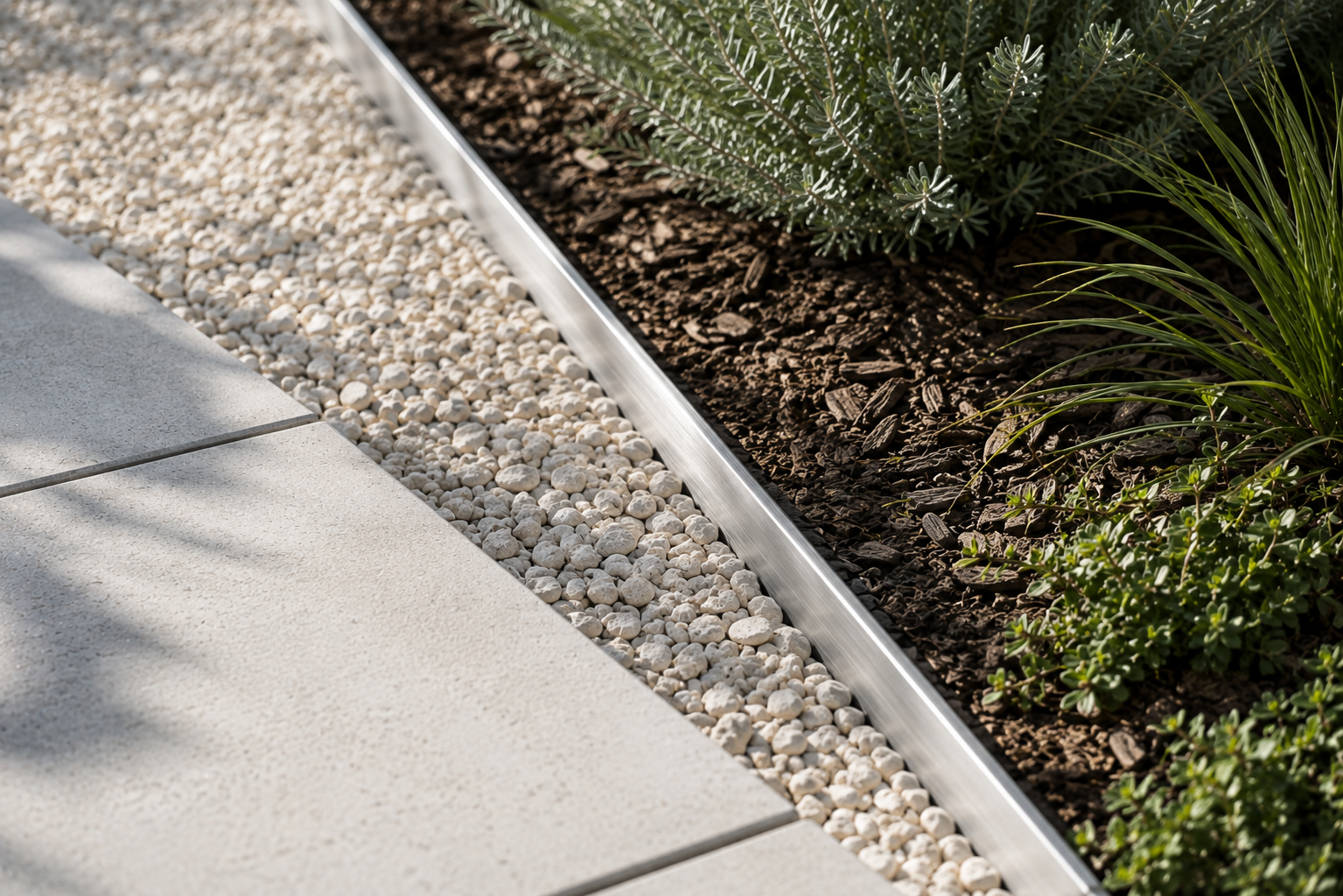
Start with what the edge needs to do.
The right edging height depends on the relationship between the surfaces it needs to separate. A simple lawn or garden bed boundary may require only a low profile, with most of the edging concealed below finished ground level.
Where the landscape changes elevation, a deeper profile can create a more visible vertical face and help define modest changes in level between planting, lawn, pathways and adjoining landscape areas.
Rather than choosing height by appearance alone, consider the finished levels on both sides of the edge, how much of the profile should remain visible and the role the edging needs to perform within the landscape.
Explore Terrace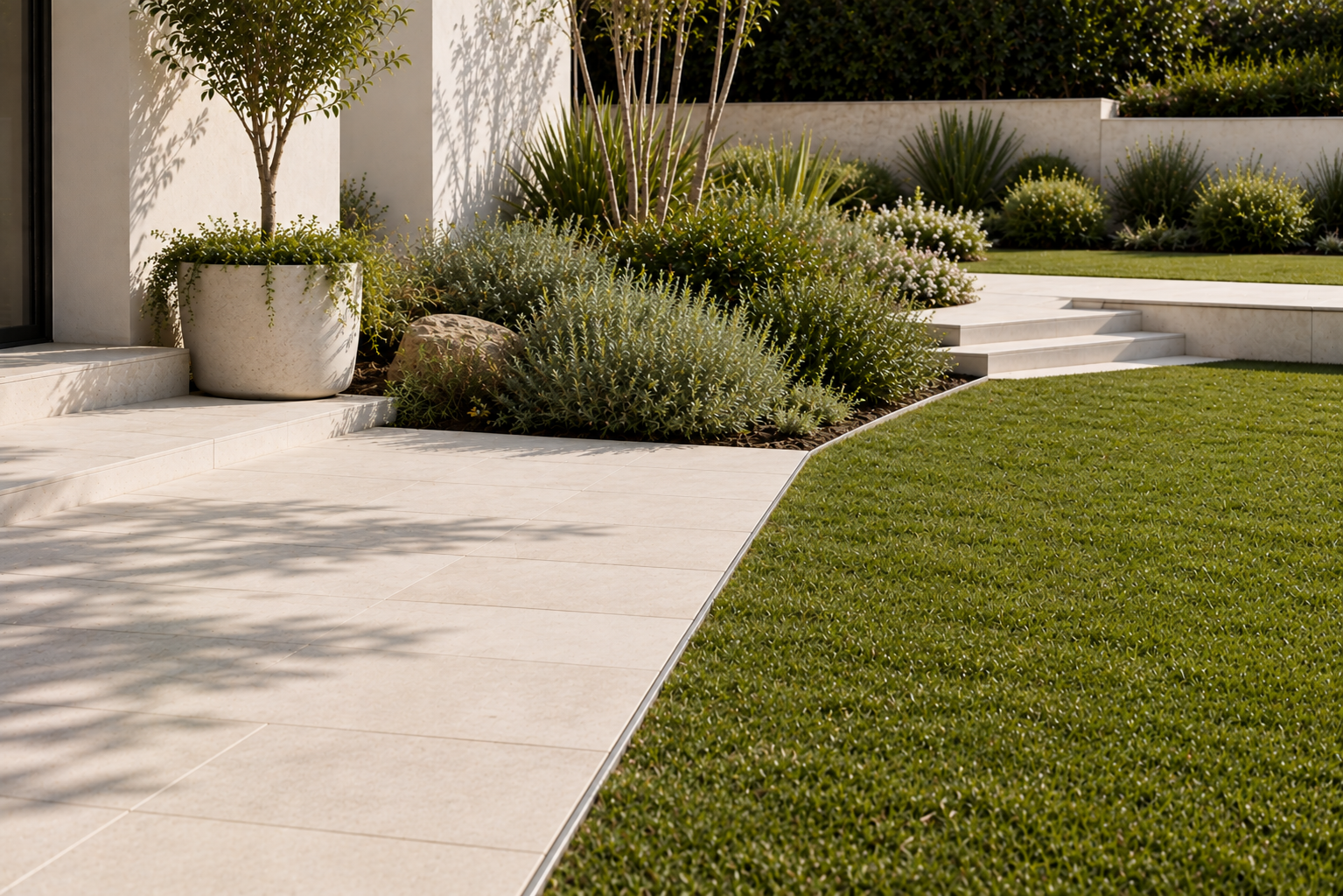
The finished line starts with the set-out.
Aluminium garden edging is typically positioned along a prepared landscape line before being secured into the ground. Taking time to establish the alignment first helps create cleaner straight runs and smoother, more controlled curves.
The edging is then fixed in position using spikes and guides, with adjoining lengths connected to create a continuous edge through the landscape.
Once the alignment and finished height are correct, soil, lawn, mulch or aggregate can be brought back to the edge so that only the intended amount of the profile remains visible.
See the installation guide
Make the edge disappear. Or let it define the line.
The finish changes how aluminium garden edging sits within the landscape. Darker colours can visually recede beside soil, mulch and shadow, while lighter finishes can complement stone, concrete and contemporary architectural materials.
Hedge aluminium garden edging is available in Black, Dark Bronze, Monument, White and Clear Anodised, allowing the edge to respond to the materials and colours already present in the landscape.
Rather than treating the edging as an isolated product, consider its finish alongside paving, walls, planting, gravel and other architectural elements within the project.
Request finish samples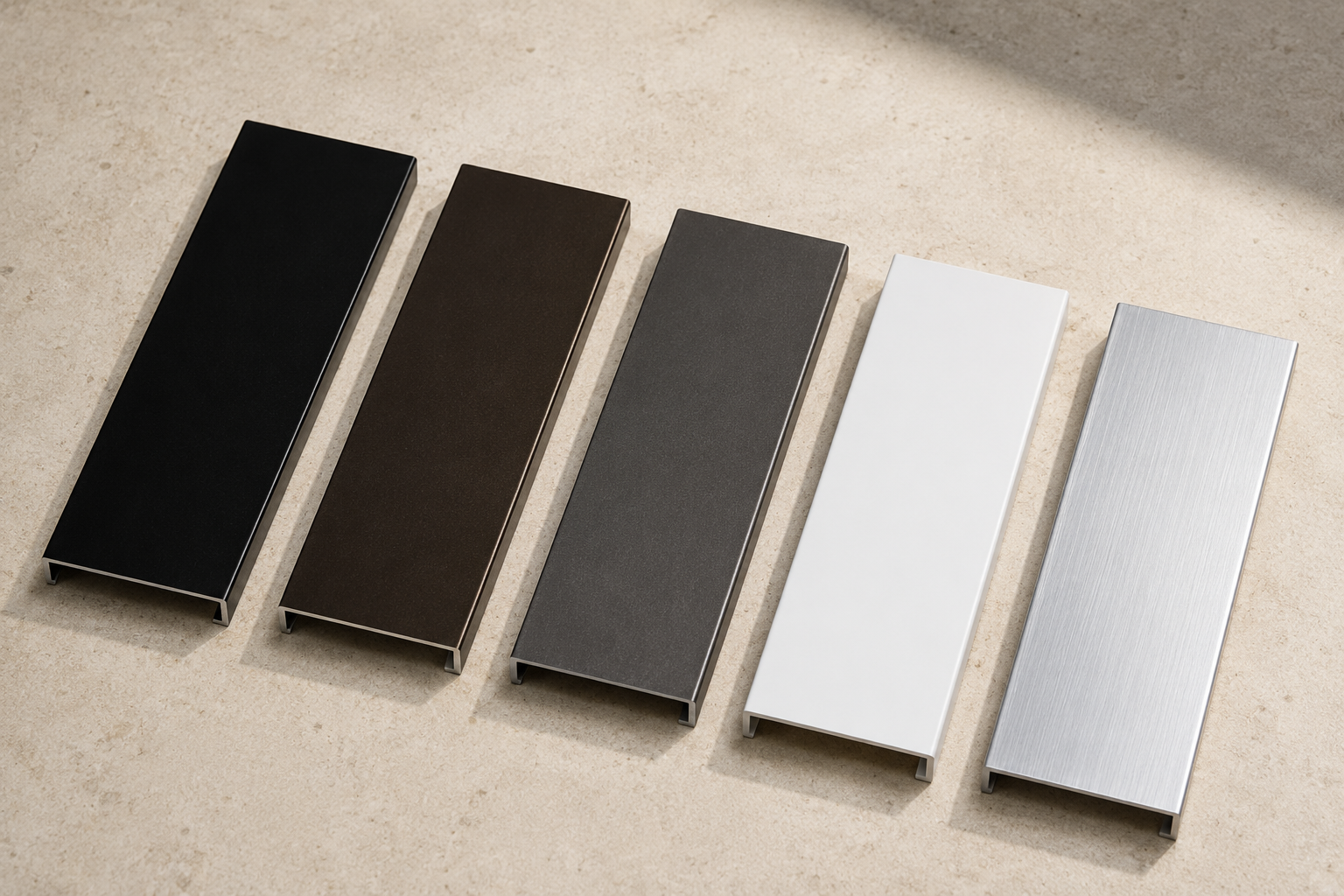
Made for life outside.
Aluminium is naturally corrosion resistant, which makes it particularly well suited to long-term use within landscapes where edging is continually exposed to soil, moisture, mulch and changing weather.
Unlike untreated ferrous metals, aluminium does not rely on developing a rusted surface as part of its appearance. This allows the edge to maintain a cleaner, more controlled finish as the surrounding landscape matures.
The life of any landscape detail will depend on its environment, installation and finish, but selecting a material designed for exterior exposure reduces the maintenance required to preserve the original design intent.
Compare edging materials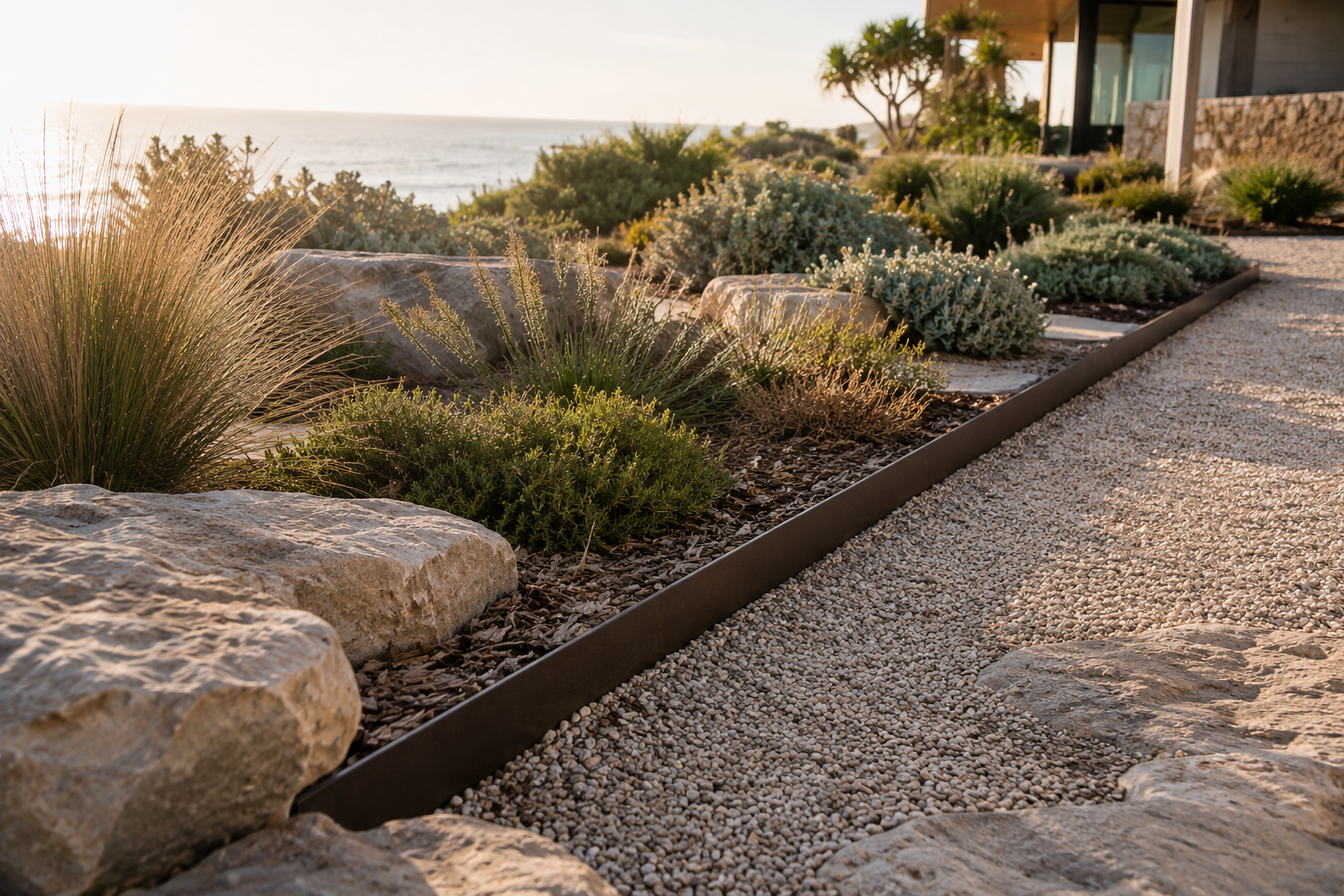
Choose for the landscape you're creating.
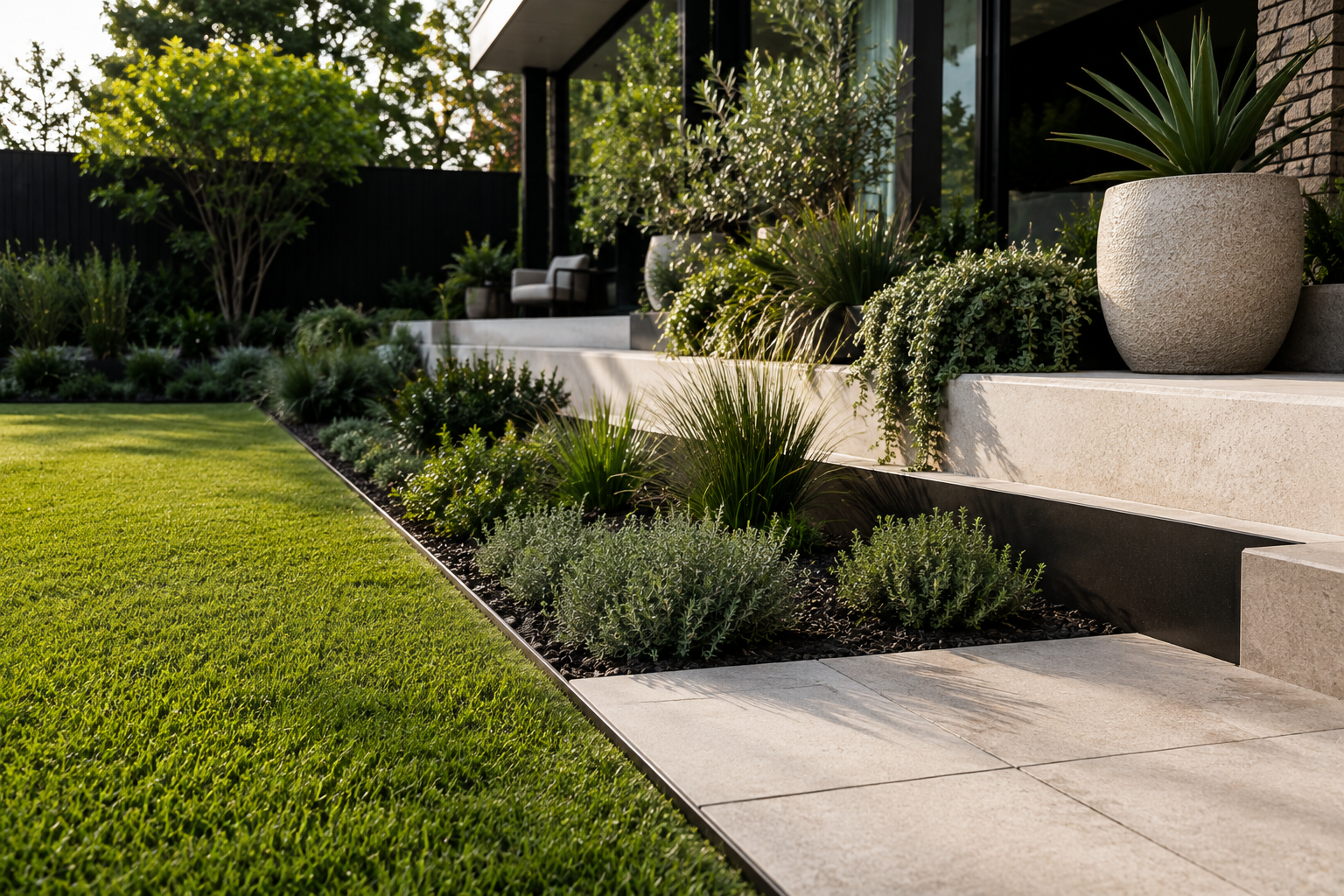
The right aluminium garden edging starts with the application. Consider what the edge needs to separate, whether the landscape follows straight lines or curves and the finished levels on either side.
From there, profile height and finish can be selected to suit the design. A low edge may almost disappear between lawn and planting, while a deeper profile can become a deliberate part of a change in level.
The objective is not simply to choose an edging product. It is to choose a system that resolves the transitions within the landscape cleanly and consistently.
Find the right edge for your landscape.
Choose your application, system, dimensions and finish, then build an estimated project price.